
Last week I attended the Bitcoin conference, where John Perkins (Confessions of an Economic Hitman and I had a fireside chat. More significantly, we spoke privately beforehand on several occasions —and what we learned surprised us both.

He discovered Bitcoin mining wasn’t the environmental/money laundering disaster outlets like The Economist claimed.
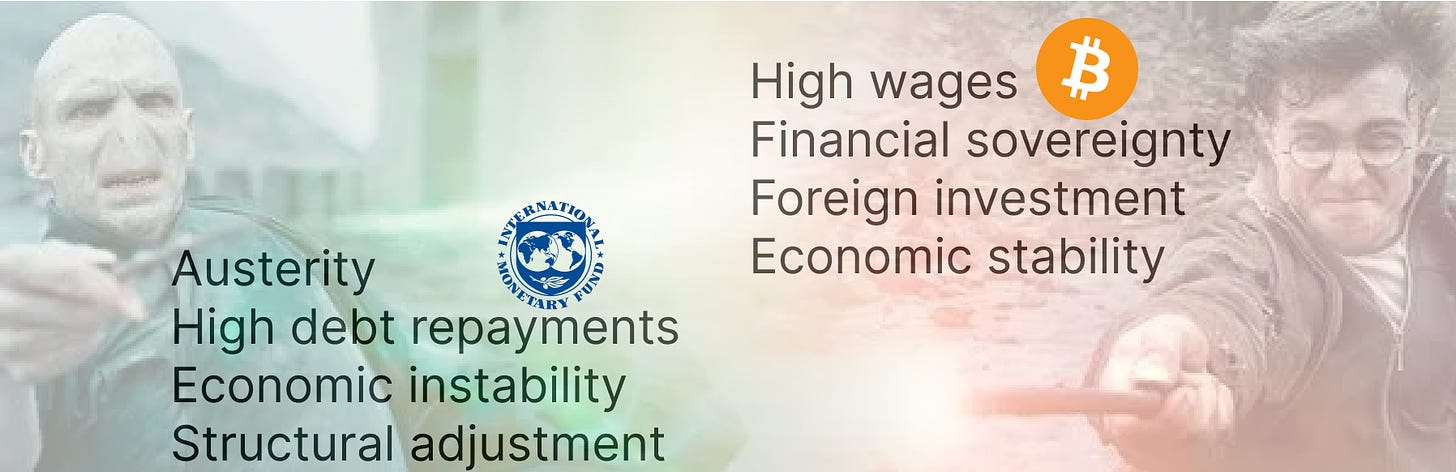
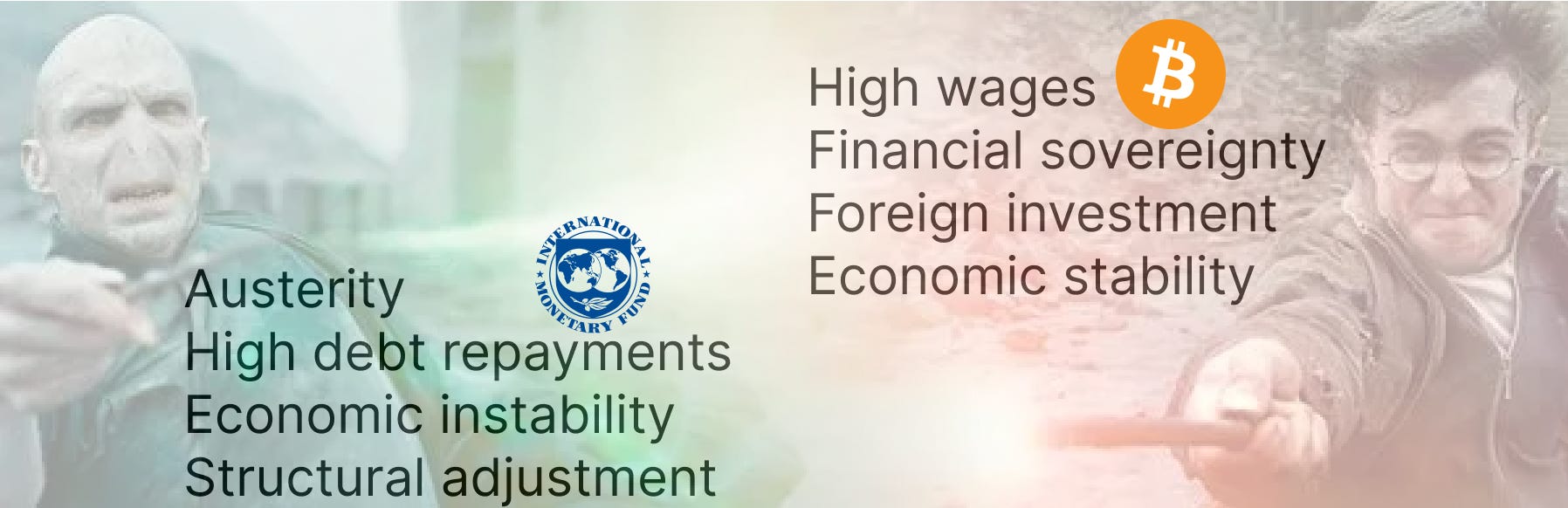
I realized just how desperately the IMF needs Bitcoin to fail.
The line “Neither can live while the other survives” comes to mind, and I’ll leave it for you to decide which one isn’t Harry.
Why does this matter?
Because this newsletter dissects what accelerates or blocks Bitcoin adoption. And right now, the most explosive emerging battleground is between Nation States adopting Bitcoin and the IMF.
Let’s start with Bhutan, because it - not El Salvador - has been the most successful Bitcoin adopter so far across three key metrics:
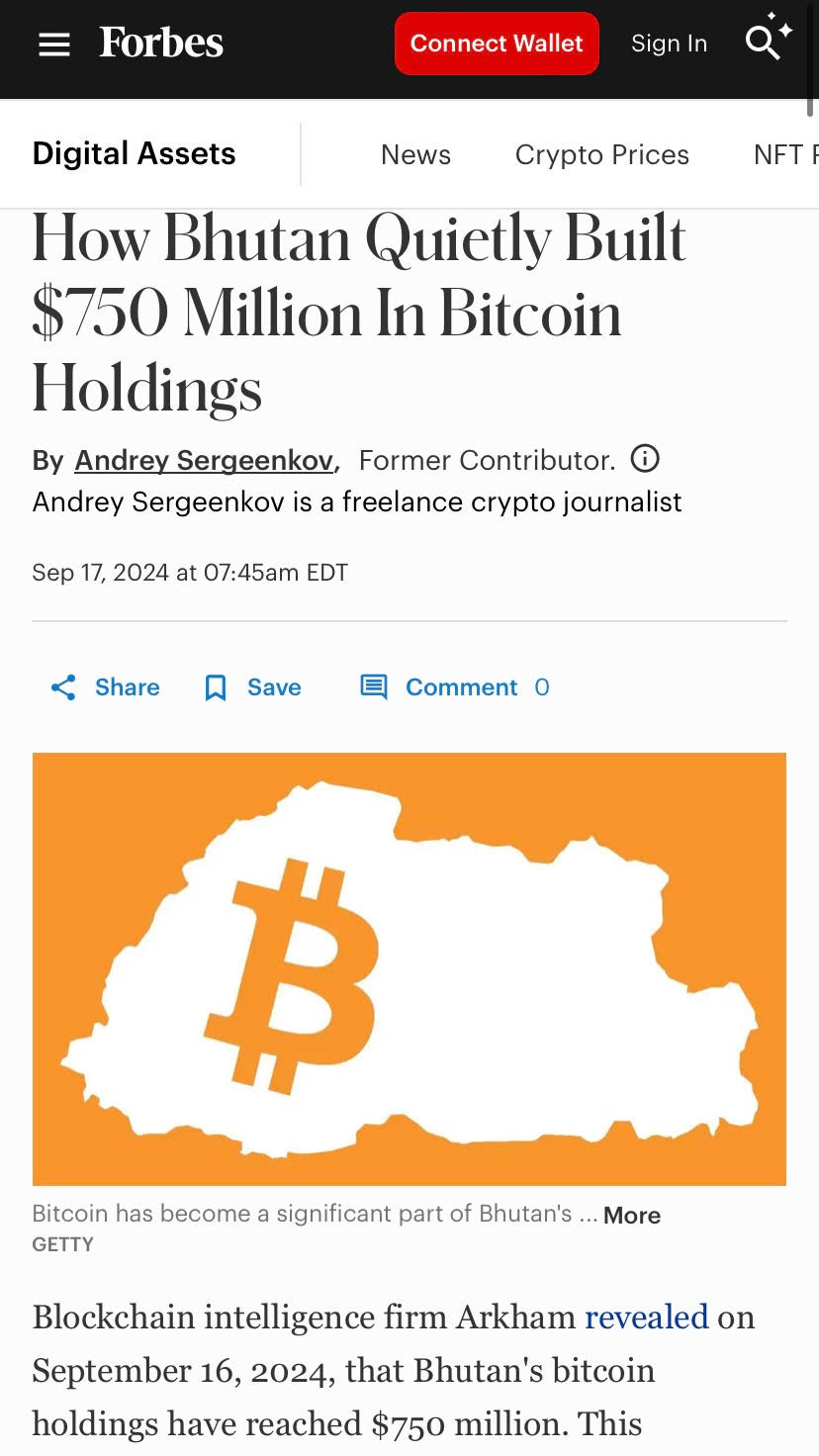
✅ has amassed a larger Bitcoin Strategic Reserve ($1.2B vs $660M)
✅ bypassed the need for IMF loans completely ($0 IMF loans vs new $1.4B loan)
✅ more profitable since they didn’t purchase any Bitcoin - they turned stranded energy turned into sovereignty (Bitcoin purchase vs Bitcoin mining)
Two Years Into Bhutan’s Bitcoin Experiment—And the IMF Couldn’t Have Been More Wrong

In Bhutan’s case, the IMF’s warnings about nations adopting Bitcoin evaporate faster than the purchasing power of fiat currencies during COVID. The IMF previously claimed nations embracing Bitcoin would face economic destabilization, reduced foreign investment, and environmental harm. Here’s what actually happened:
The Data Speaks
Fiscal Lifeline: In June 2023, Bhutan used $72 million from Bitcoin reserves to fund a 50% salary increase for civil servants—directly contradicting the IMF’s fear of "currency instability."
Dollar Shield: As foreign reserves dwindled to $464 million, Bitcoin holdings acted as a buffer, preventing a liquidity crisis.
Public Goods: Prime Minister Tshering Tobgay in an interview said that bitcoin also "supports free healthcare and environmental projects"
Economic Anchor: Tobgay also said their Bitcoin reserves helped in "stabilizing [the nation’s] $3.5 billion economy" — hardly the "volatility trap" the IMF predicted.
Investment Magnet: Analysts now suggest Bhutan’s model could attract new foreign capital, especially for renewable energy projects.

The Real Question
The IMF’s projections weren’t just off—they were 180° off. This wasn’t a forecasting error. It was either willful ignorance or a deliberate attempt to scare nations away from monetary sovereignty.
How did Bhutan shatter the IMF’s playbook? The answer lies in three specific moves—each one a blueprint for other nations.
When institutions like the IMF lose their credibility as economic oracles, their power crumbles. Bhutan’s success isn’t just a win for Bitcoin—it’s a blueprint for escaping the debt-austerity cycle.
The IMF’s next move? Double down on warnings—or admit they’ve been completely wrong with their “predictions” for both El Salvador and Bhutan. The IMF’s “serious concerns” response to Pakistan’s announcement they were going to copy Bhutan’s model (mine Bitcoin using surplus energy and form a Bitcoin strategic reserve) suggests that, unsurprisingly, they are taking the first road.
Why is the IMF so concerned about what Bhutan has achieved?
Nearing the 3-month Threshold:
IMF tends to get involved when foreign reserves of a nation with a world bank loan (as Bhutan has) cover <3 months of imports. This is done through their joint “Debt Sustainability Framework”, where a shortfall may prompt IMF engagement for “financial assistance or policy recommendations.” Bhutan’s reserves at $464M (Oct, 2023) equaled only 4.1 months of import coverage (Bhutan imports average $112 Million per month)— perilously close to the 3-month danger-zone where an IMF would potentially be needed, likely coming with “structural adjustment” demands. Historically, the IMF exploited such gaps (e.g., Pakistan 2022: $3B IMF loan imposed fuel subsidy cuts). Bhutan avoided this by liquidating Bitcoin reserves instead.
Added Factor: Energy Independence:
Bhutan mines Bitcoin using surplus hydropower (30,000+ miners powered by 2.3GW dams). This generated income without fossil fuels, negating the IMF’s "environmental risk" argument. Worse for the IMF: Bhutan’s 100% renewable energy grid turned Bitcoin into a trade surplus tool, attracting foreign data-center investment.
By liquidating Bitcoin reserves to cover the shortfall, Bhutan achieved three blows to IMF influence:
1. Debt Dependence Broken
The $72 million Bitcoin-funded civil servant raise wasn't just good politics – it was a direct challenge to IMF orthodoxy. Normally at this reserve level, the IMF would demand wage freezes and austerity. Instead, Bhutan proved nations can bypass what was supposed to be an unavoidable choke point in the financial system.
2. Currency Influence Undermined
Bhutan's Bitcoin reserves created a parallel system that reduced reliance on USD-denominated IMF loans. This is existential for the IMF – their entire monetary policy leverage depends on maintaining weak-fiat economies in the dollar orbit. When a nation demonstrates it can use Bitcoin to stabilize a $3.5 billion economy (as PM Tobgay confirmed), it shreds the IMF's claim that dollar reserves are the only option.
3. Poor Quality Predictions Exposed
The IMF's credibility relies, in part, on being the unchallenged authority on economic stability forecasting. Yet Bhutan's success – using Bitcoin to fund healthcare and environmental projects while avoiding crisis – makes their dire Bitcoin warnings look either incompetent or deliberately misleading. This erosion of trust is irreversible.
The IMF's Nightmare Scenario
Bhutan's hydropower-powered Bitcoin mining (generating $3.6Million+ per week from surplus renewable energy creates an even more dangerous precedent. It:
Neutralizes Environmental Criticism: With 100% renewable energy, Bhutan turned Bitcoin into a green energy commodity attracting data-center investment from Bitdeer and rendering the IMF's climate arguments obsolete.
Creates a Playbook for Larger Economies: If a $3.5B kingdom can use Bitcoin reserves to avoid IMF dependency, what’s to stop Nigeria ($477B GDP) or Kenya ($113B GDP) doing the same during their next currency crisis? The answer: nothing … except the IMF itself.
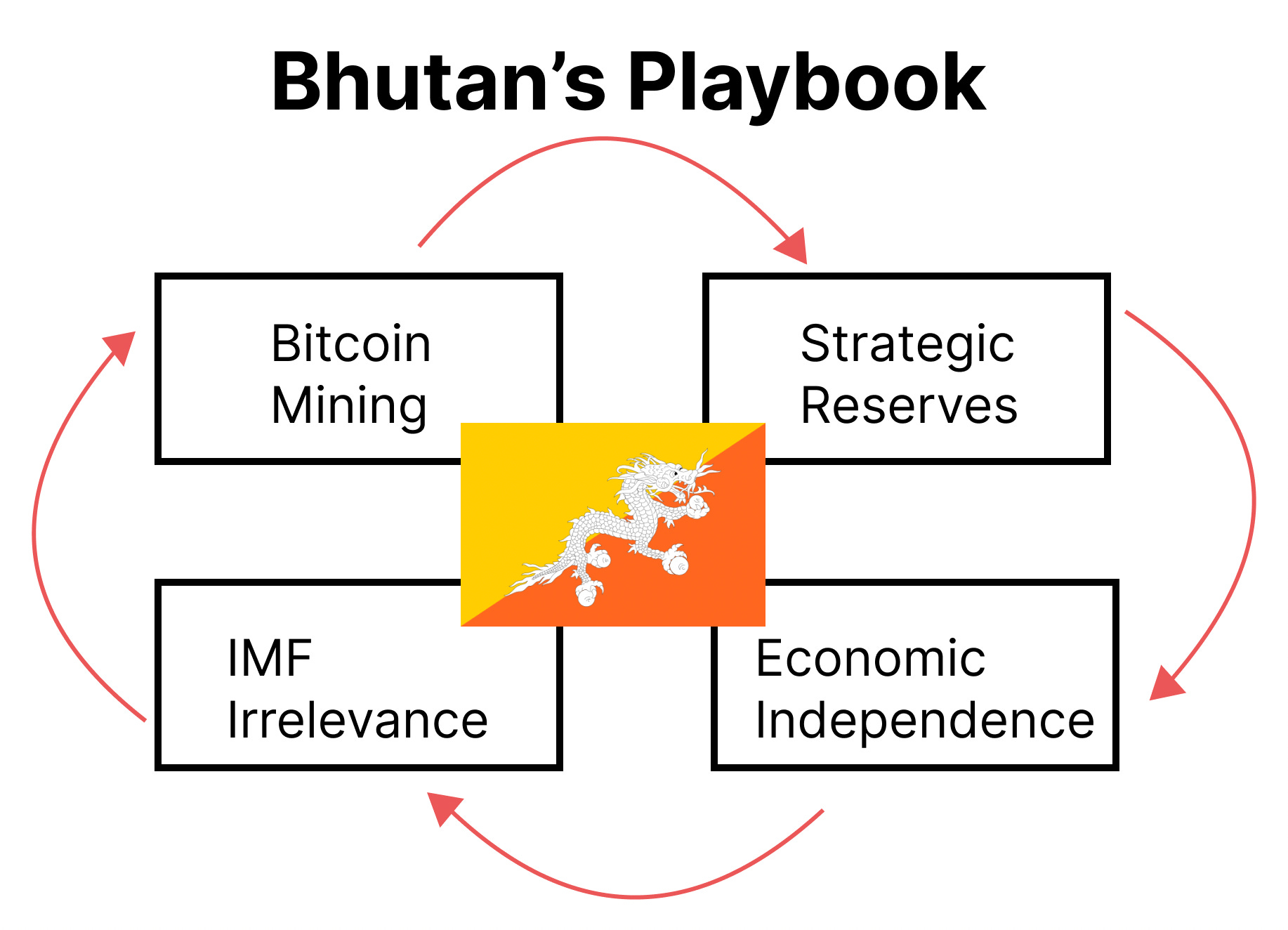
The real fear for the IMF isn't Bitcoin's “price volatility” – it's the demonstration that their entire crisis-response business model can be circumvented. When nations see Bhutan using Bitcoin reserves to fund salaries instead of accepting IMF-mandated wage cuts, it doesn't just weaken the Fund's authority – it reveals to more and more people that their entire framework of "help" is fundamentally predatory.
This explains the IMF's increasingly regular Bitcoin warnings. They're not protecting nations from risk – they're protecting their monopoly on loan finance to distressed nations. These loans come with an average of 26.8 conditions attached, often including austerity measures and have been shown in peer reviewed research to make economic circumstances worse for the indebted nation.
Bhutan proved that with renewable energy and strategic Bitcoin reserves, even small economies can find an alternative path to IMF loans. The question now is how many other countries will follow the escape path Bhutan has blazed.
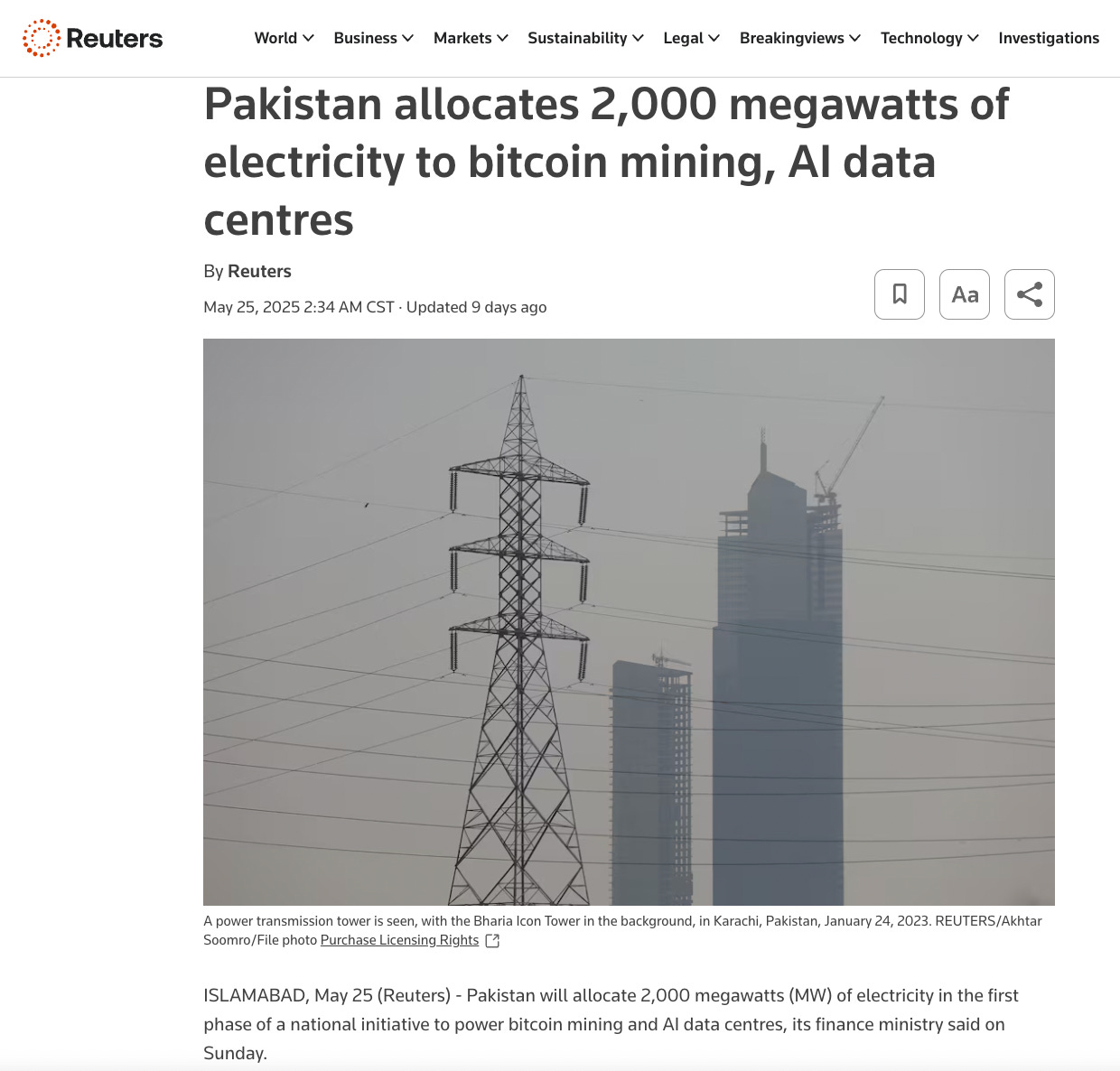
Pakistan is trying, having just announced the intention to mine Bitcoin using stranded energy, and form a Bitcoin Strategic Reserve - straight out of Bhutan’s playbook. Unlike Bhutan however, they are heavily indebted to IMF. So it remains to be seen if they will be successful in the face of IMF’s debt leverage. There is no question that if Pakistan follows through on their Bitcoin mining and strategic reserve strategies it will bring greater prosperity and less reliance on IMF. The IMF will do all they can to prevent another domino falling.
This is so clear and understandable. Thank you.