
Last newsletter, we analyzed 5 new live charts tracking different Bitcoin ESG metrics.
This week, we tackle a topical question: what will happen to the world under two different scenarios: grids packed with Bitcoin mining vs grids packed with AI datacenters?
First some context: right now, Bitcoin mining and AI data centers are in a power struggle for power on the grid. Basically there’s not enough power and too many users wanting that power, especially in the US, where the grid has not increased in generation capacity for since 2007, that’s 17 years!
So two tribes; limited resources. Sounds like a recipe for tension right? Let’s find out.
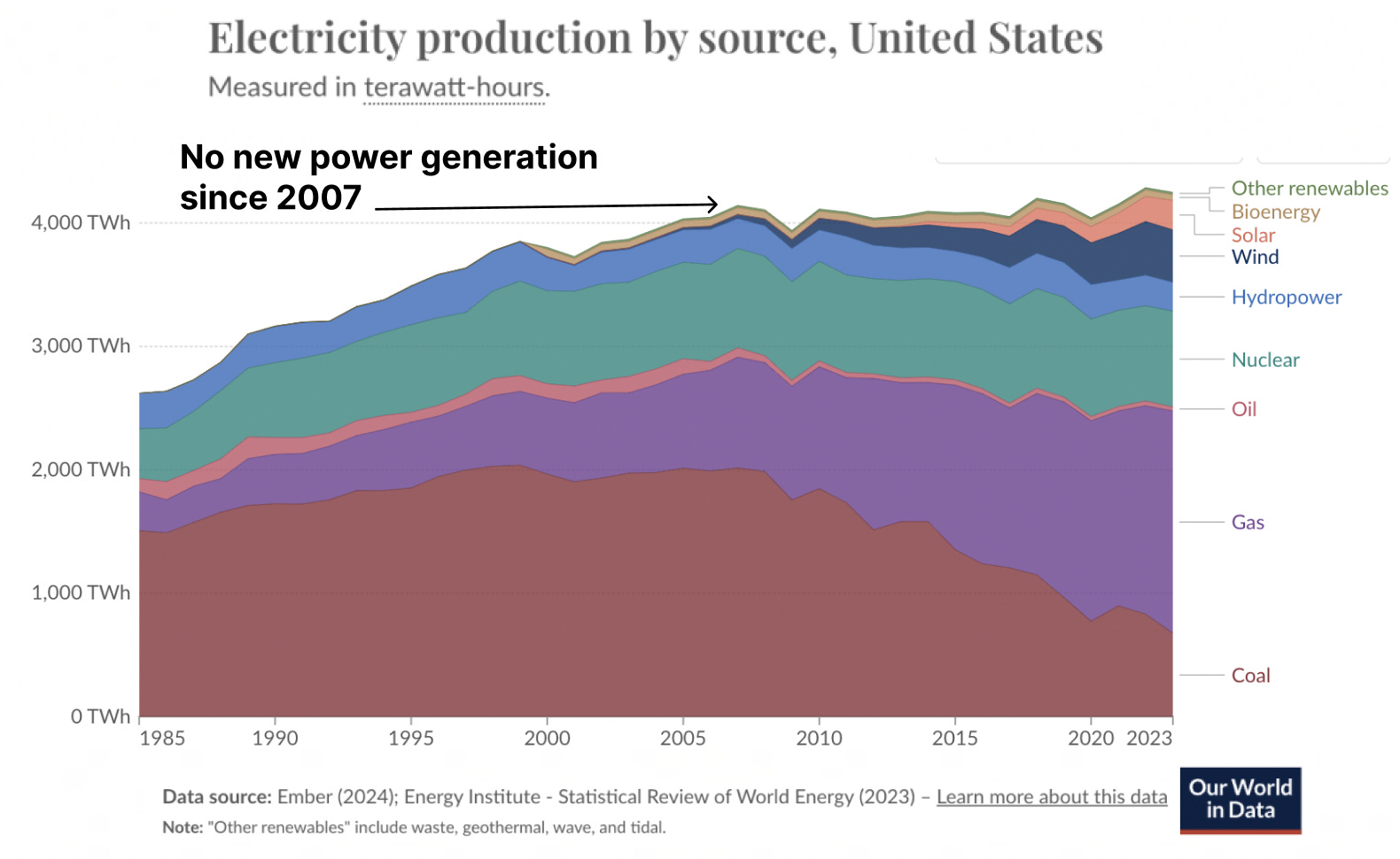
First let’s understand each tribe. The key difference between Bitcoin mining and AI/HPC data centers is in their energy consumption patterns. Bitcoin mining can ramp up or throttle down their energy usage on a dime. This flexibility makes them perfect for balancing out the fluctuating energy supply from renewables.
On the other hand, AI data centers need 24/7 uptime. This means they're not as adaptable to the ebbs and flows of renewable energy.
So while AI data centers are busy crunching numbers and trying to figure out why we humans are so weird, Bitcoin miners are out there, flexing their energy consumption muscles and helping to stabilize the grid.
As we can see though in this graphic below from a whitepaper by Rhodes et al, Flexible data centers like Bitcoin mining operations help grid operators to de-carbonize grids, whereas inflexible data centers mean grid operators must build more fossil-fuel baseload onto the grid to meet their 24/7 requirements.
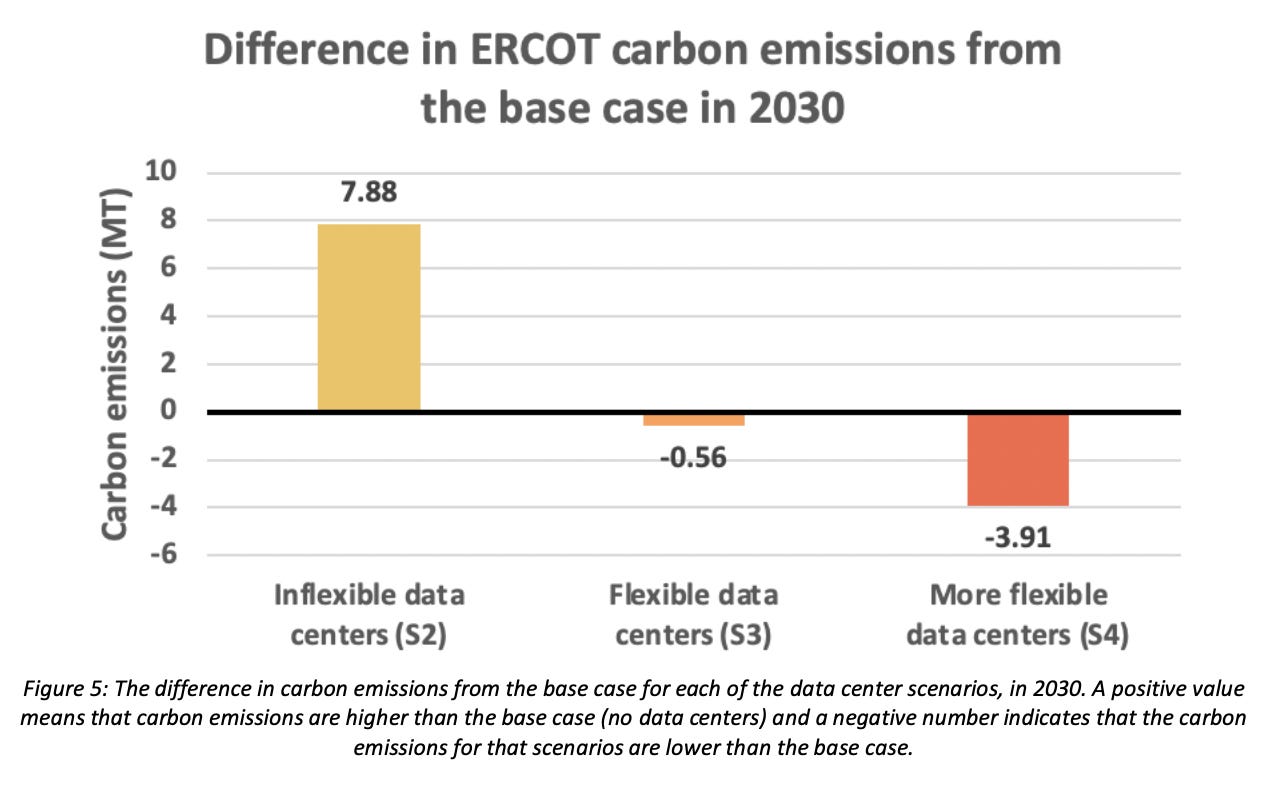
The authors were independent energy experts from outside the Bitcoin ecosystem, and the paper they wrote is probably the most important paper ever written about Bitcoin and its impact on grids, because the repercussions are so huge.
Extrapolating Rhodes’ findings into the future, it’s no stretch to say that whether it’s more Bitcoin mining, or more AI on the grid could determine whether grids meet their net zero emission targets.
It’s a little known secret that Bitcoin data centers are the world’s most flexible data centers.
So next time you hear someone verbally copy&paste some journalist’s latest piece of Bitcoin gaslighting, ask them how they feel about AI data centers.
Any way you cut it, if your goal is net zero emissions, Bitcoin mining moves us closer to that target, whereas AI datacenters move us further away from it.
Trailblazers
Marathon Digital Holdings is now warming a town of over 11,000 residents in Finland using heat generated from a 2MW Bitcoin mining plant.
This is possible through district heating which involves centrally heating water using bitcoin mining-generated heat and distributing it through underground pipes to local buildings.
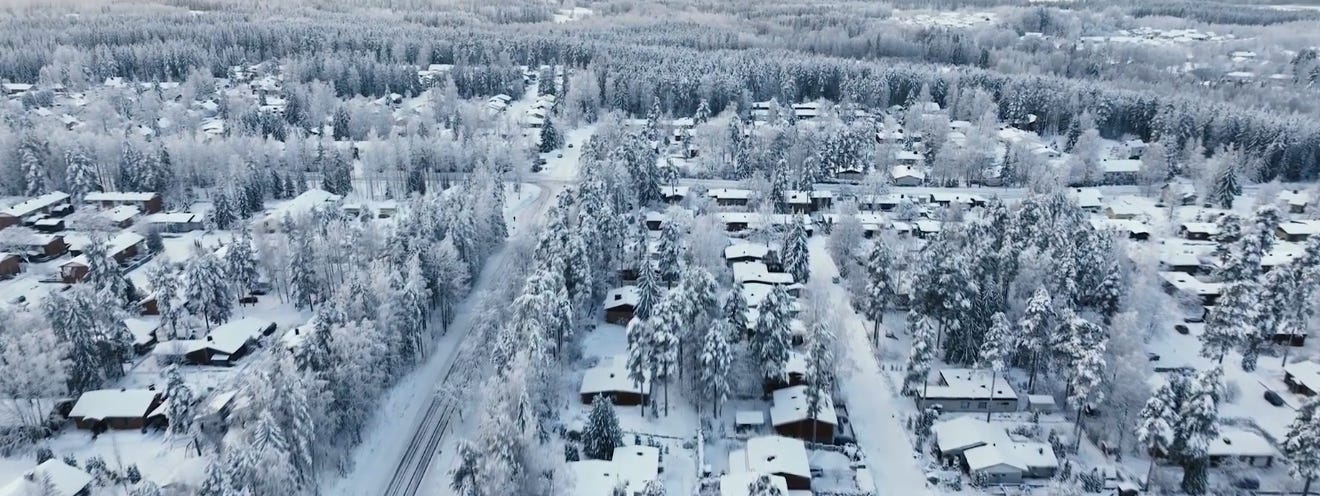
Why it matters: While sexy projects like eVs command lots of attention, all global transport combined commands 20% of global energy use. Heating by contrast comprises half the world’s energy. Much of that is from fossil fuels. Any efforts that promote R&D into recycling heat from electric sources such as Bitcoin miners helps us decarbonize the way we live.
The project is Marathon's debut in Europe as it continues to expand globally.
Top Picks
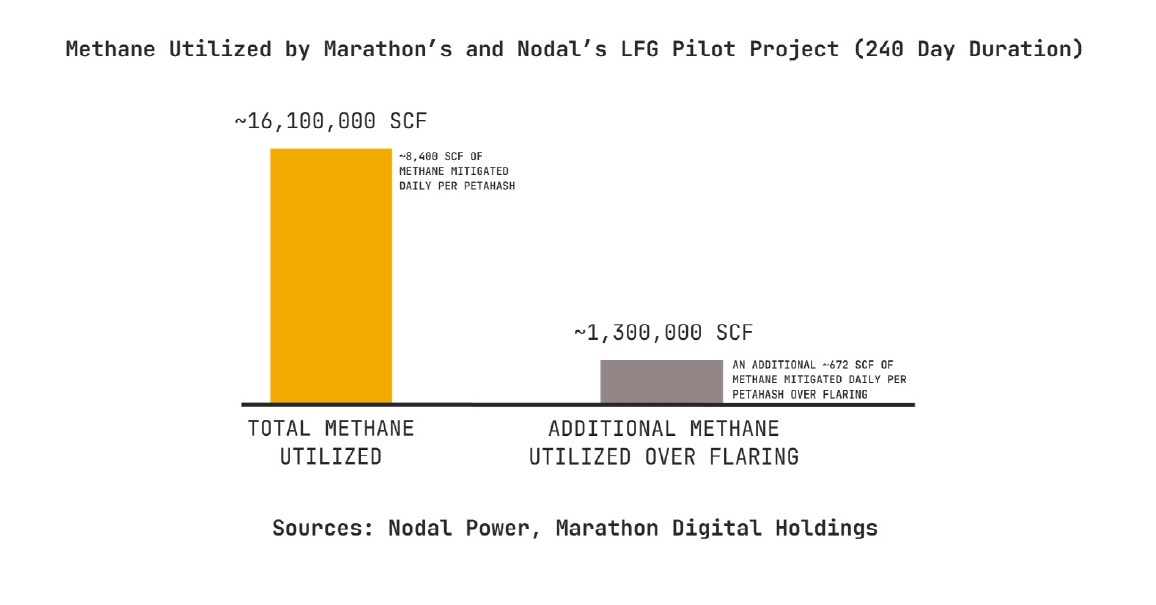
Earlier this month, a new study was released demonstrating that using landfill gas (LFG) for Bitcoin mining is economically viable, sustainable, and environmentally beneficial.
The study came out of a pilot project by Marathon and Nodal Power that successfully converted methane from a landfill into electricity, powering a data center with lower-than-average costs and high reliability.
Meanwhile, Greenpeace USA released a new Bitcoin report which was not only unsupported by data, but position them as an increasingly isolated voice in their stance on Bitcoin mining. Nonetheless, it important to continue to point out the errors and omissions in their research. I do so here in my rebuttal (7 min read)
Features
In Swan's "21 Voices," I explain Bitcoin mining's role in reducing methane emissions. This video is now being seen by senators and MPs, and could become one of the more important narrative shifting artefacts we’ve had to date.
Housekeeping Notes
Time out to say “thanks”

Your subscription has helped to get DARI started. DARI is a new Institution-grade research site, which we’ll be using to educate both the general public and ESG Investment Committees at the world’s Sovereign Funds about the social and environmental importance of Bitcoin mining. We could not have done it without your support, so thank you!
See you in the next issue.
Read the research on this at batcoinz.com: How Bitcoin mining keeps energy prices low
Enquire about coaching for Bitcoiners and founders.